
Location: Wuzhong City, Ningxia Province, China
Crop: Pepper (Capsicum annuum)
Growing Area: Open-field cultivation
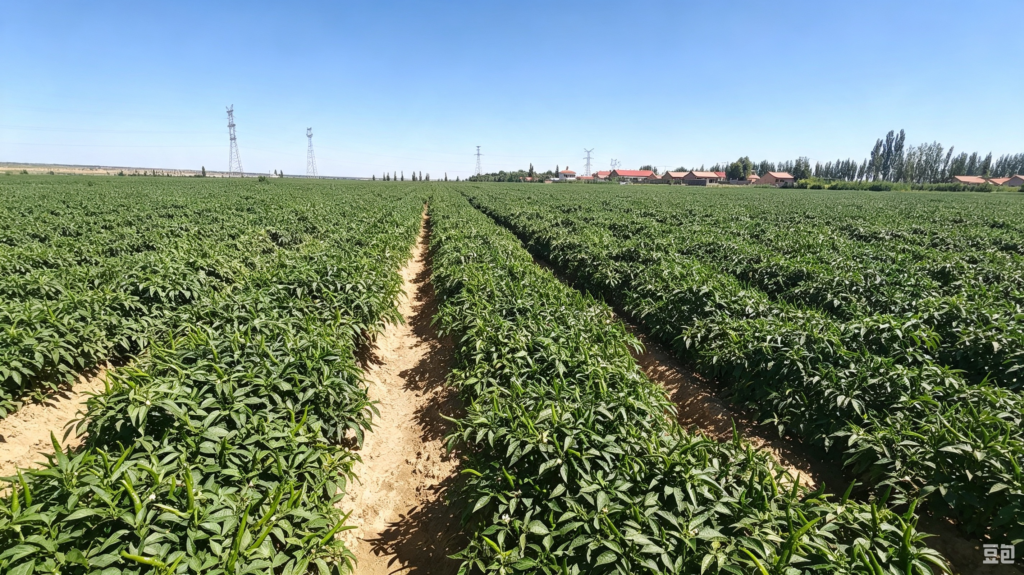
During the pepper growing season, our agricultural technical team visited a local pepper field in Wuzhong, Ningxia, to provide on-site crop diagnosis and technical guidance.
Ningxia has abundant sunlight and a dry climate; however, during certain periods of the growing season, high temperature combined with irrigation and humidity conditions can create favorable conditions for disease development and physiological stress.
During the field inspection, our technical team identified two major problems affecting pepper growth:
- Pepper white leaf spot disease
- Sunscald caused by strong sunlight and high temperature stress
Field Observation & Problem Diagnosis
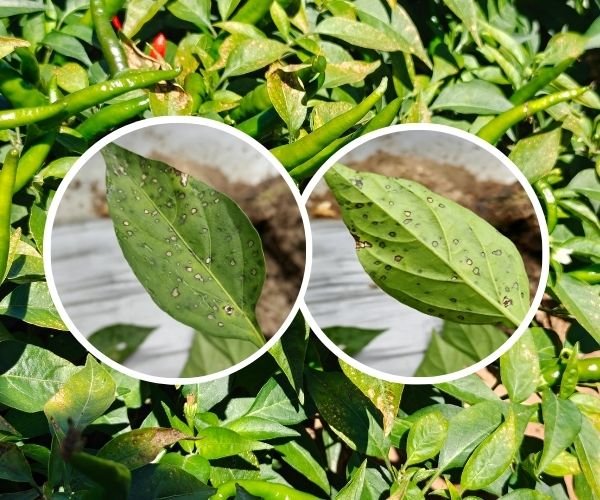
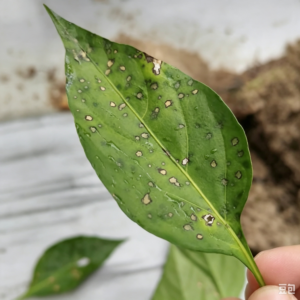
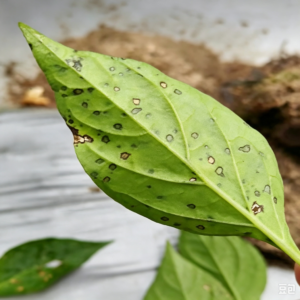
During the field survey, the pepper plants showed typical symptoms of white leaf spot:
- Round gray-white spots appearing on leaves
- Gradual expansion of lesions under suitable environmental conditions
- Severe infection causing leaf tissue necrosis and perforation
- Reduced leaf area and weakened photosynthetic capacity
At the same time, some leaves showed symptoms related to sunscald stress:
- Leaf tissue damage caused by intense sunlight exposure
- Reduced plant vigor under high-temperature conditions
- Increased susceptibility to secondary diseases
The combination of fungal infection and environmental stress affected plant growth, leaf quality, and potential yield performance.
Technical Analysis
Based on field conditions, our technical team analyzed that the main factors contributing to the problem were:
1. Favorable Conditions for Disease Development
High temperature and humidity periods increased the risk of fungal pathogen infection, especially when plant canopy density reduced air circulation.
2. Environmental Stress
Strong sunlight and high temperatures increased leaf stress, affecting plant resistance and recovery ability.
3. Need for Integrated Crop Management
Disease control alone was not enough. Plants also required nutritional support to improve stress tolerance and maintain healthy growth.
Recommended Solution
Based on the field diagnosis, our technical team recommended an integrated management program combining fungicide protection and foliar nutrition.
1. Fungicide Application for Disease Control
Recommended active ingredients:
- Difenoconazole
- Tebuconazole
Application guidance:
- Apply by uniform foliar spraying to ensure good leaf coverage
- Repeat treatment every 5–7 days depending on disease severity
- Continue for 2–3 applications for effective disease suppression
These fungicides help inhibit fungal development, reduce disease spread, and protect healthy leaves.
2. Amino Acid Foliar Fertilizer for Plant Recovery
To improve plant stress resistance and support recovery, an amino acid foliar fertilizer was recommended together with fungicide application.
Benefits:
- Supports leaf recovery after disease and sun stress
- Improves plant tolerance under high-temperature conditions
- Provides rapid nutritional support through foliar absorption
- Helps maintain healthy plant growth and photosynthetic activity
Field Management Recommendations
In addition to chemical and nutritional solutions, our technical team provided the following cultivation advice:
- Improve field ventilation and light penetration
- Avoid excessive humidity inside the canopy
- Maintain balanced irrigation management
- Monitor disease symptoms regularly for early intervention
- Apply preventive protection before severe disease development
Expected Field Results
Through integrated management combining disease control and plant nutrition support, the program aims to achieve:
✓ Reduced occurrence and spread of white leaf spot
✓ Improved leaf health and photosynthetic performance
✓ Enhanced tolerance against heat and sunlight stress
✓ Stronger plant growth and better yield potential
Healthy crops require more than a single treatment. Through professional field visits, crop diagnosis, and customized solutions, our agricultural technical team helps growers identify problems early and implement effective management strategies.
For pepper production under challenging environmental conditions, combining targeted fungicide protection with amino acid foliar nutrition provides a practical approach to maintaining crop health and improving production stability.