
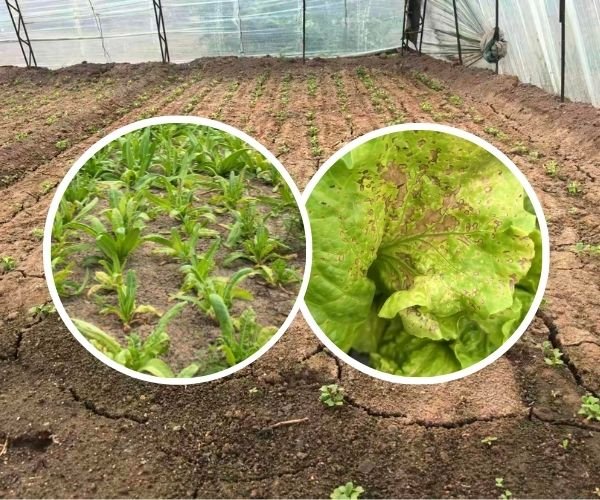
During a routine field visit, Wellyou agricultural technicians inspected vegetable greenhouses growing lettuce and leaf lettuce. Several crop problems were observed, including weak root development, uneven plant growth, and leaf spots that affected crop quality.
After analyzing the field conditions, the main challenge was identified as poor soil health. Long-term intensive greenhouse cultivation had gradually reduced soil vitality, affecting root growth and increasing crop sensitivity to environmental stress.
This case demonstrates how proper greenhouse soil improvement practices can help restore soil conditions, improve root development, and support healthier vegetable production.
Field Problems Observed
1. Weak Root Development and Poor Nutrient Absorption
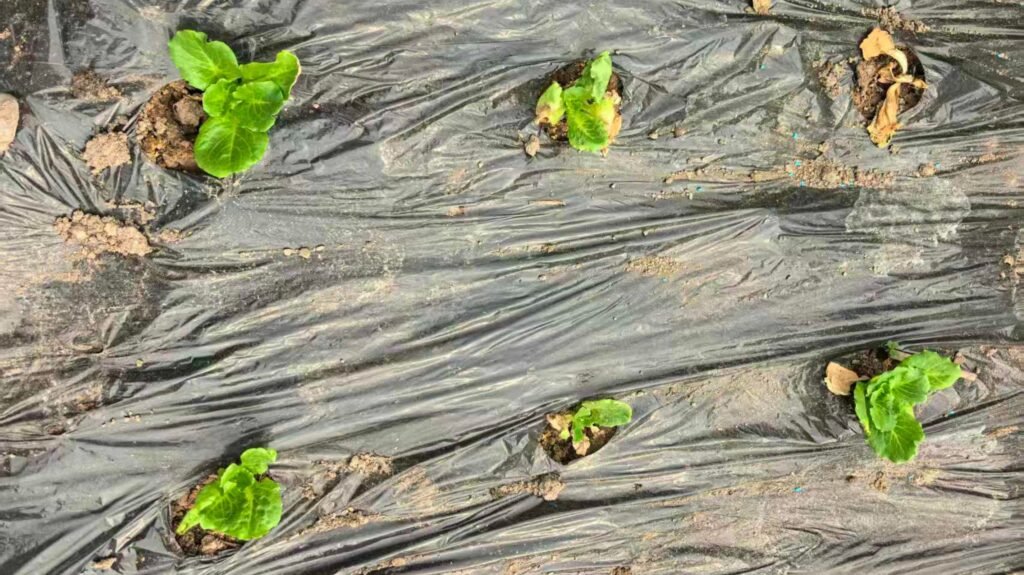
The lettuce and leaf lettuce plants showed weak root systems with limited root growth. As a result, plants had lower nutrient absorption capacity and reduced growth performance.
The main causes were related to soil degradation, including:
- Soil compaction caused by continuous greenhouse cultivation
- Reduced soil organic matter and biological activity
- Excessive application of low-quality organic fertilizers
- Use of incompletely decomposed manure
Healthy roots require a balanced soil environment with sufficient organic matter, good aeration, and active microorganisms. When soil conditions deteriorate, even sufficient fertilizer application cannot achieve the expected crop performance.
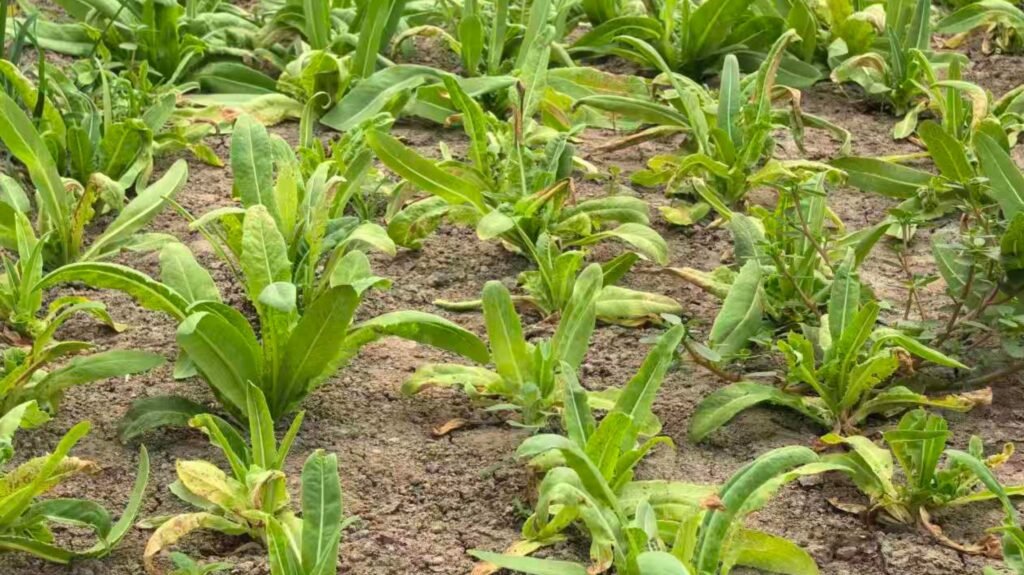
2. Leaf Spots Caused by Anthracnose
During field inspection, irregular brown spots were found on lettuce leaves. Based on the symptoms, the issue was identified as anthracnose.
Although the symptoms appeared on the leaves, the underlying cause was closely related to soil conditions. Weak roots caused by unhealthy soil reduced plant resistance and made crops more vulnerable to diseases.
Improving soil health is an important part of integrated crop management.
3. Soil Acidification and Iron Accumulation
Another common issue found in greenhouse soils was acidification.
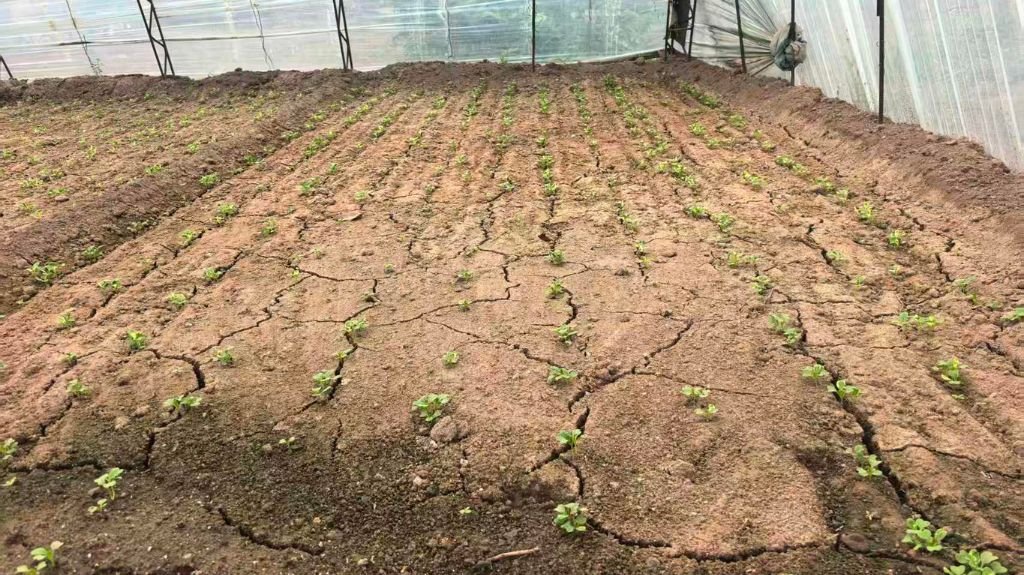
After years of intensive cultivation, continuous use of acidic fertilizers and large amounts of organic manure can gradually lower soil pH. Under acidic conditions, iron compounds in the soil become more active.
With repeated irrigation and drying cycles, iron may accumulate on the soil surface, forming:
- Red or rust-colored layers
- Red powder-like deposits
- Surface stains that disappear after watering and reappear after drying
These symptoms are often accompanied by:
- Soil compaction
- Green moss or red algae growth
- Weak root systems
- Nutrient imbalance, including iron and manganese disorders
Causes of Soil Problems
The main factors affecting greenhouse soil quality included:
1. Continuous Cropping and Nutrient Imbalance
Repeated vegetable cultivation in the same greenhouse can gradually reduce soil fertility and biological activity.
2. Excessive Use of Acidic Fertilizers
Long-term application of fertilizers such as ammonium sulfate and superphosphate may contribute to soil acidification when not properly managed.
3. Improper Organic Fertilizer Management
Unfermented manure or low-quality organic fertilizers may damage soil structure and increase the risk of root problems.
4. Poor Water Management
High soil moisture followed by drying conditions can accelerate iron oxidation and create unfavorable soil environments.
Greenhouse Soil Improvement Strategy
Effective greenhouse soil improvement requires a comprehensive approach combining soil conditioning, organic matter management, and root development support.
1. Soil Conditioning Before Planting
Before transplanting, farmers are recommended to apply:
- Organic carbon fertilizers
- Bio-organic fertilizers
- Humic acid-based soil conditioners
These products help improve soil structure, increase organic matter content, and create a better environment for beneficial microorganisms.
A healthier soil structure allows roots to expand more easily and improves water and nutrient utilization.
2. Root Development Management After Transplanting
After transplanting, potassium humate, fulvic acid potassium, or liquid humic acid fertilizers can be applied through fertigation or drip irrigation.
Recommended application method:
- Apply at a suitable reduced dosage according to soil conditions
- Repeat applications during key growth stages
- Focus on improving root activity and soil environment
Humic substances support soil conditioning by improving nutrient availability, stimulating root growth, and helping plants better tolerate environmental stress.
3. Long-Term Soil Health Management
For sustainable greenhouse vegetable production, farmers should focus on:
- Using fully decomposed organic fertilizers
- Maintaining balanced soil pH
- Increasing soil organic carbon levels
- Improving microbial activity
- Applying soil conditioners regularly
Good crop production starts with healthy soil. A scientific soil management program is essential for maintaining stable yields and crop quality.
Results and Benefits
By implementing soil improvement practices, growers can achieve:
- Stronger root systems
- Improved nutrient absorption
- Better crop uniformity
- Increased plant resistance
- Improved vegetable quality
- More sustainable greenhouse production
Wellyou Technical Support
At Wellyou Tech, we provide more than fertilizer products. We focus on practical agricultural solutions based on field conditions and crop requirements.
Through soil diagnosis, technical guidance, and suitable products including humic acid, fulvic acid, organic carbon fertilizers, and biostimulants, Wellyou helps growers improve soil health and build a stronger foundation for sustainable crop production.