
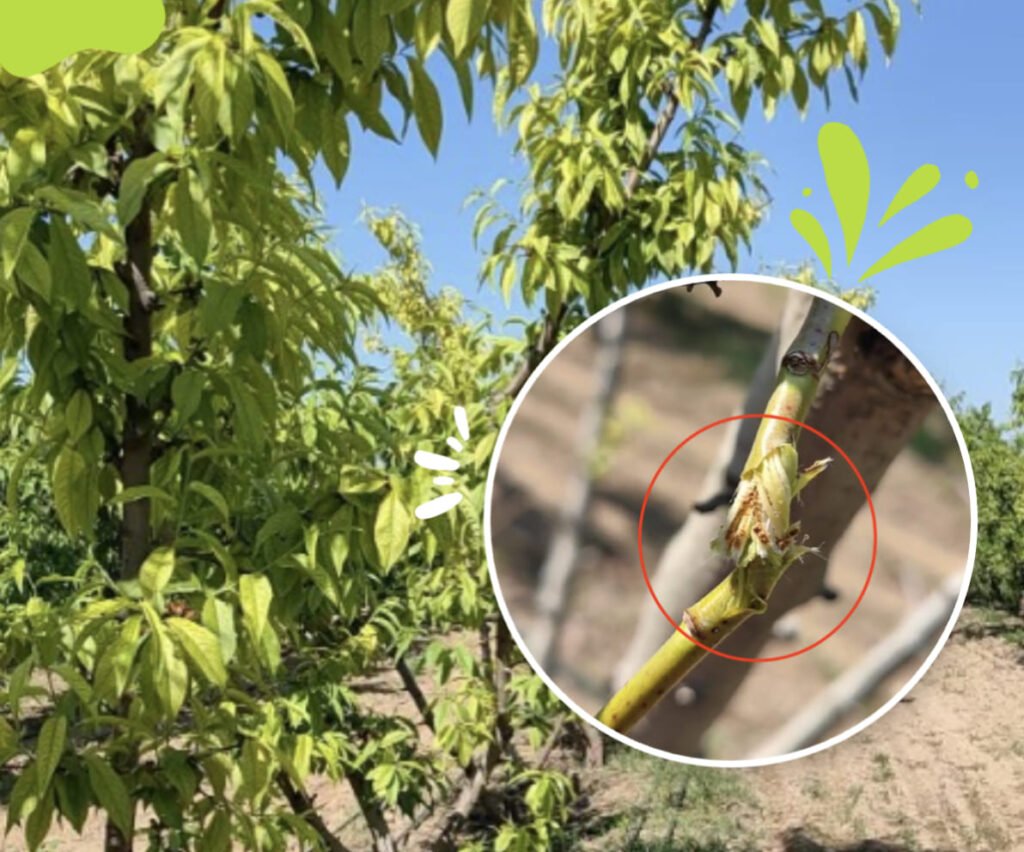
Peach tree Fusarium wilt is a vascular disease caused by soil-borne pathogens. The pathogen enters through root wounds and spreads upward via the xylem. External symptoms may be subtle in early stages, while internal wood shows brown streaks and progressive decay. Infected leaves often exhibit unilateral yellowing and branch wilting, temporarily recovering in the mornings and evenings, eventually leading to branch dieback and tree death.
Key Point: Complete eradication after infection is extremely difficult; focus should be on prevention and early intervention.
1. Disease Characteristics of Fusarium Wilt
- Pathogen Source: Soil-borne; enters through damaged roots
- Progression: Moves from roots to xylem, causing internal browning and heartwood decay
- Symptoms: Half-yellow leaves, wilting branches, gradual decline, eventual tree death
- Challenge: External appearance may remain normal while internal tissues are affected
2. Preventive Measures of Fusarium Wilt
2.1 Site Selection & Planting Material
- Avoid soils previously cultivated with cotton, eggplant, pepper, potato, or old peach orchards
- Source healthy, disease-free seedlings
2.2 Root Protection & Cultivation
- Minimize deep plowing; fertilize away from main roots
- Ensure proper drainage; waterlogging increases disease incidence
2.3 Soil Improvement & Pathogen Suppression
- Apply well-decomposed organic fertilizers and microbial fertilizers (e.g., Bacillus subtilis, Trichoderma harzianum)
- Apply 25–40 kg/acre agricultural lime in autumn to adjust pH and suppress pathogens
2.4 Regular Preventive Root Applications
- Timing: pre-bud break, post-flowering, pre-rainy season
- Apply:
- Metalaxyl or similar fungicides
- Bacillus subtilis
- Humic acid water-soluble fertilizer
- Method: drench the root zone for full orchard coverage
3. Treatment Strategies of Fusarium Wilt
3.1 Mild Infection (Individual Branches)
- Pruning: Remove affected branches, burn outside orchard; apply wound healing agent
- Root Drench (every 10–15 days, 2–3 applications):
- Option A: 30% Metalaxyl (1000x dilution) + Bacillus subtilis
- Option B: Aluminum-phosphonate, manganese-zinc + rooting agent + humic acid
- Foliar Spray (every 7–10 days): Brassinosteroids + amino acid foliar fertilizer + carbendazim
3.2 Severe Infection (Whole-tree Wilting)
- Remove entire tree, including roots; burn outside orchard
- Apply lime + fungicide to planting hole; leave site fallow ≥ 6 months
4. Critical Points to Avoid
- Avoid raw/partially decomposed manure
- Avoid over-irrigation; maintain alternating dry/moist soil
- Avoid excessive pruning
- Do not intercrop with Solanaceae crops
5. Quick Reference Mnemonic
“Avoid continuous cropping, prevent waterlogging, minimize root injuries; plant healthy seedlings, nourish soil with microbial fertilizers; prune affected branches, drench roots with fungicides, protect soil; remove severely infected trees, disinfect soil.”
Effective management of peach tree Fusarium wilt relies on preventive strategies, early detection, and rapid intervention. Integrating soil management, microbial fertilizers, and careful pruning can substantially reduce disease incidence and maintain orchard productivity.
Explore Wellyou Tech’s full range of microbial fertilizers and soil conditioners to protect your orchard.