
1. Background Information
- Crop: Zucchini (Cucurbita pepo)
- Growing system: Greenhouse cultivation
- Planting pattern: Continuous cropping (重茬种植)
- Location: Hebei, China
- Growth stage: Early fruiting stage
2. Problem Description
In this greenhouse, severe plant decline was observed during the production period:
Field Symptoms
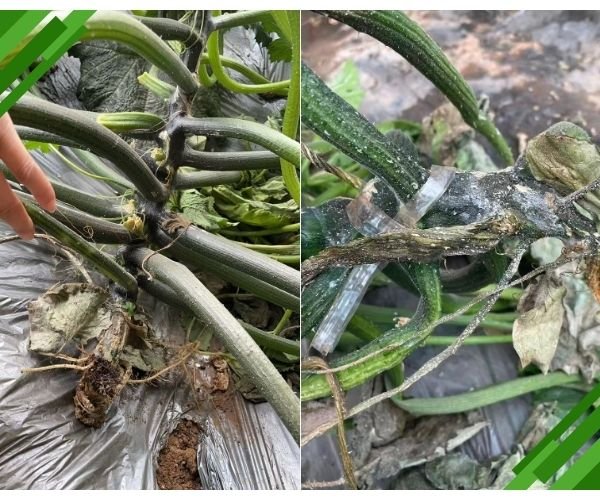
- Sudden wilting of plants despite sufficient soil moisture
- Stem base showing water-soaked lesions and rot
- Root system brown, decayed, and poorly developed
- Leaves turning yellow, then necrotic and collapsing
- High plant mortality (dead plants scattered across rows)
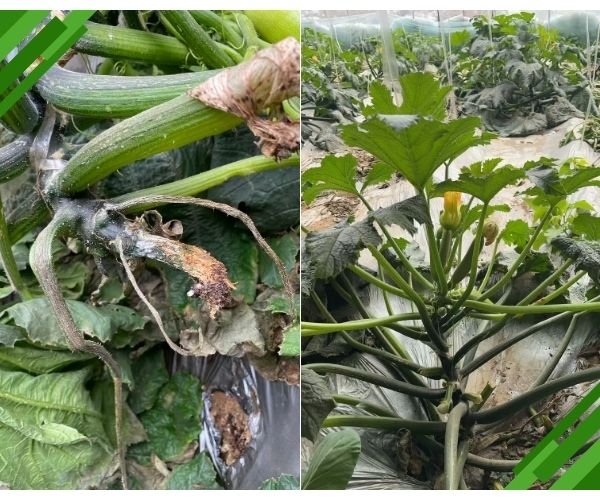
👉 From the photo:
- Clear stem base rot and vascular damage
- Root system severely degraded
- Advanced infection leading to complete plant collapse
3. Diagnosis
Primary Cause
Continuous cropping (soil-borne pathogen accumulation) leading to:
Root rot disease complex, mainly caused by:
- Pythium spp.
- Phytophthora spp.
- Fusarium spp.
Contributing Factors
- Soil pathogen buildup due to lack of rotation
- High humidity and poor drainage in greenhouse
- Weakened root system from stress and repeated planting
- Possible over-irrigation or waterlogging
- Insufficient soil disinfection before planting
4. Treatment Strategy on Root Rot
A combined chemical + management approach was adopted.
4.1 Chemical Control Program
Active Ingredients Used:
- Metalaxyl-M (精甲霜灵) → Targets oomycetes (Pythium, Phytophthora)
- Hymexazol (噁霉灵) → Controls soil-borne fungi and promotes root recovery
- Propamocarb Hydrochloride (霜霉威盐酸盐) → Strong systemic action against damping-off pathogens
Application Method
- Soil drenching (root zone application)
- Applied directly to the base of affected plants
- Repeated every 5–7 days, 2–3 applications depending on severity
4.2 Supporting Measures (Highly Recommended)
To improve effectiveness:
1. Root Recovery Enhancement
- Apply biostimulants such as:
- Fulvic acid
- Amino acids
- Seaweed extract
Helps regenerate root system and improve stress tolerance
2. Soil Improvement
- Add organic matter or microbial products
- Introduce beneficial microbes (e.g., Bacillus spp.)
3. Water Management
- Avoid over-irrigation
- Improve drainage conditions
4. Sanitation
- Remove severely infected plants
- Prevent spread via irrigation water
5. Results
After treatment:
- Disease progression significantly slowed
- New root growth observed in mildly affected plants
- Plant vigor partially restored
- Mortality rate reduced in subsequent cycles
6. Key Takeaways
- Continuous cropping greatly increases risk of soil-borne diseases
- Early detection + rapid root-zone treatment is critical
- Chemical control must be combined with soil and root management
- Biostimulants can significantly improve recovery and reduce losses
7. Recommendations for Future Prevention
- Implement crop rotation whenever possible
- Use soil disinfection before planting
- Apply preventive root protection program
- Combine fungicides with biostimulant-based nutrition strategy