
Author name: Cathy

Hi, I’m Cathy Liu, the founder of [http://wellyoutech.com/] Wellyou Tech is a professional supplier of agricultural chemicals, the main products are fertilizer synergists and plant stimulants.

S-ABA: A Natural Plant Growth Regulator for Crop Quality and Stress Resistance

S-ABA: A Natural Plant Growth Regulator for Crop Quality and Stress Resistance

1. Product Overview S-ABA (S-Abscisic Acid) is a naturally occurring plant hormone widely present in all green plants. It is a high-purity and high-biological-activity plant growth substance produced through advanced microbial fermentation technology. It is non-toxic, non-irritating, and environmentally friendly, making it a safe and sustainable solution for modern agriculture. As a new-generation natural bio-active …

S-ABA: A Natural Plant Growth Regulator for Crop Quality and Stress Resistance Read More »

Soil Aggregate Structure: A Key Factor Determining Soil Fertility

Soil Aggregate Structure: A Key Factor Determining Soil Fertility

Soil fertility is not determined by nutrients alone. In modern agronomy, soil aggregate structure is widely recognized as a core factor influencing water retention, aeration, nutrient availability, microbial activity, and long-term soil productivity. Well-structured soils with stable aggregates create the physical foundation that allows fertilizers and soil amendments to work efficiently. 1. What Is Soil …

Soil Aggregate Structure: A Key Factor Determining Soil Fertility Read More »

Potassium phosphite

Potassium Phosphite: Mode of Action, Benefits, and Agricultural Applications

Advanced Phosphorus–Potassium Nutrition & Plant Immunity Activation Potassium phosphite (K-phosphite) is a new-generation phosphorus and potassium fertilizer known for its high bioavailability, systemic mobility, environmental safety, and strong plant immunity–activating properties. Unlike conventional phosphate fertilizers, phosphite contains phosphorus in the +3 oxidation state, allowing it to function not only as a nutrient source but also …

Potassium Phosphite: Mode of Action, Benefits, and Agricultural Applications Read More »

Potassium Dihydrogen Phosphite (KH₂PO₃): High-Purity P-K Source for Liquid Fertilizer Production

Potassium Dihydrogen Phosphite (KH₂PO₃): High-Purity P-K Source for Liquid Fertilizer Production

Potassium Dihydrogen Phosphite (KH₂PO₃), commonly referred to as Potassium Phosphite, is a high-efficiency, water-soluble phosphorus–potassium compound designed especially for liquid fertilizer manufacturing. It offers not only rapid nutrient absorption but also systemic mobility within plants and a built-in defense stimulation effect, making it a powerful raw material for producing advanced and value-added liquid fertilizers. Product …

Potassium Dihydrogen Phosphite (KH₂PO₃): High-Purity P-K Source for Liquid Fertilizer Production Read More »

Dipotassium Hydrogen Phosphite High-Purity Source of Potassium and Phosphite for Advanced Crop Nutrition

Dipotassium Hydrogen Phosphite Liquid – High-Purity Source of Potassium and Phosphite for Advanced Crop Nutrition

1. Product Overview Dipotassium Hydrogen Phosphite (K₂HPO₃, liquid) is a high-purity, fully water-soluble phosphite–potassium fertilizer widely adopted in intensive and precision agriculture. Unlike traditional phosphate fertilizers, phosphite (HPO₃²⁻) exists in a lower oxidation state, giving it unique mobility, bioavailability, and plant defense activation capabilities. The product is formulated as a clear, stable liquid with high …

Dipotassium Hydrogen Phosphite Liquid – High-Purity Source of Potassium and Phosphite for Advanced Crop Nutrition Read More »

Understanding the Difference Between Humic Acid and Potassium Humate

Understanding the Difference Between Humic Acid and Potassium Humate

In modern agriculture, humic substances are often praised as “soil doctors” — improving soil health, boosting nutrient uptake, and enhancing crop growth. Yet, many growers still wonder: What’s the difference between humic acid and potassium humate? Let’s break it down clearly and practically. 1. What They Are Humic Acid is a group of natural organic …

Understanding the Difference Between Humic Acid and Potassium Humate Read More »

Winter Root Management for Crops: 4 Key Practices to Keep Roots Strong in Cold Seasons

Winter Root Management for Crops: 4 Key Practices to Keep Roots Strong in Cold Seasons

Winter brings a challenge for every grower — low soil temperature slows down root growth, weakens nutrient uptake, and increases the risk of root rot or frost damage. Effective winter root management for crops focuses on both environmental adaptation and precise cultivation practices. Below are four field-proven strategies to help roots stay active, grow deeper, …

Winter Root Management for Crops: 4 Key Practices to Keep Roots Strong in Cold Seasons Read More »

humic acid is your essential partner for greener, more productive, and more sustainable farming.

The Power of Humic Acid: 5 Mechanisms That Make Crops Thrive

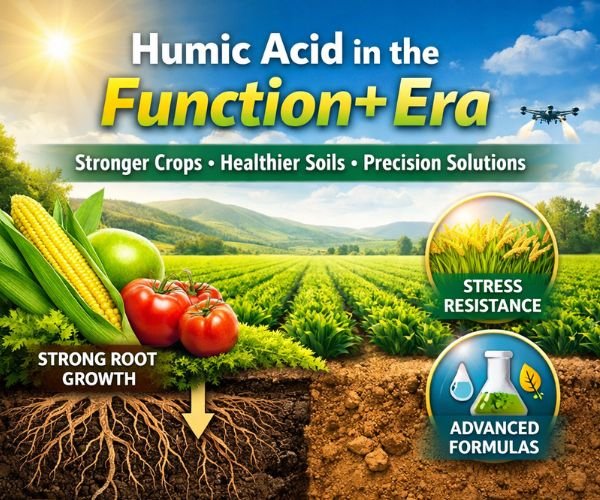
In the agricultural world, humic acid is known as the “all-round helper” — it improves soil structure, boosts root growth, enhances stress resistance, and increases fertilizer efficiency. But few people truly understand why it works so well. In fact, the power of humic acid lies in its ability to coordinate the soil–plant–microbe system. Let’s break …

The Power of Humic Acid: 5 Mechanisms That Make Crops Thrive Read More »

Bacillus subtilis

Bacillus subtilis — Unlocking Organic Nitrogen, Powering Fast-Acting Nitrogen!

In modern agriculture, organic nitrogen from crop residues, manure, or compost plays a key role in soil fertility—but most of it exists in complex, large molecular forms that plants cannot directly absorb. Here comes Bacillus subtilis, the “pioneer microorganism” that initiates the transformation of organic nitrogen into plant-available, fast-acting nitrogen. 1. The Core Function of …

Bacillus subtilis — Unlocking Organic Nitrogen, Powering Fast-Acting Nitrogen! Read More »

Chelation Effect of Sugar Alcohols in Fertilizers

Sugar Alcohols: the Chelation Effect of in Fertilizers

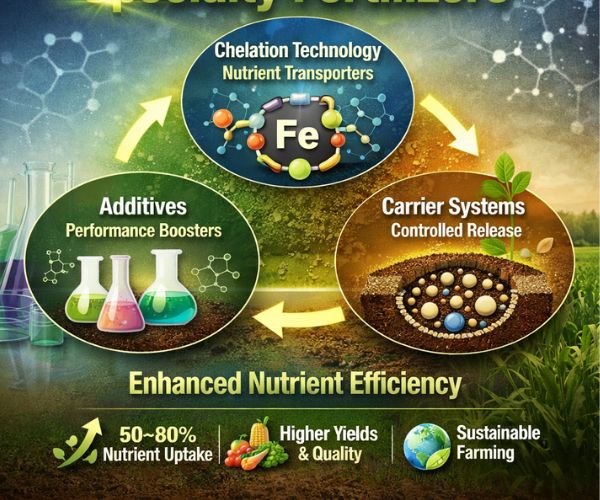
In the field of modern plant nutrition, sugar alcohols (polyols) such as mannitol, sorbitol, and xylitol have become valuable natural chelating agents. They not only stabilize essential nutrients but also improve their transport and absorption within the plant system. As a result, sugar alcohols are increasingly used in high-efficiency fertilizers designed for sustainable agriculture. 1. …

Sugar Alcohols: the Chelation Effect of in Fertilizers Read More »

Scroll to Top
×

Hello!

Click one of our contacts below to chat on WhatsApp

× How can I help you?