
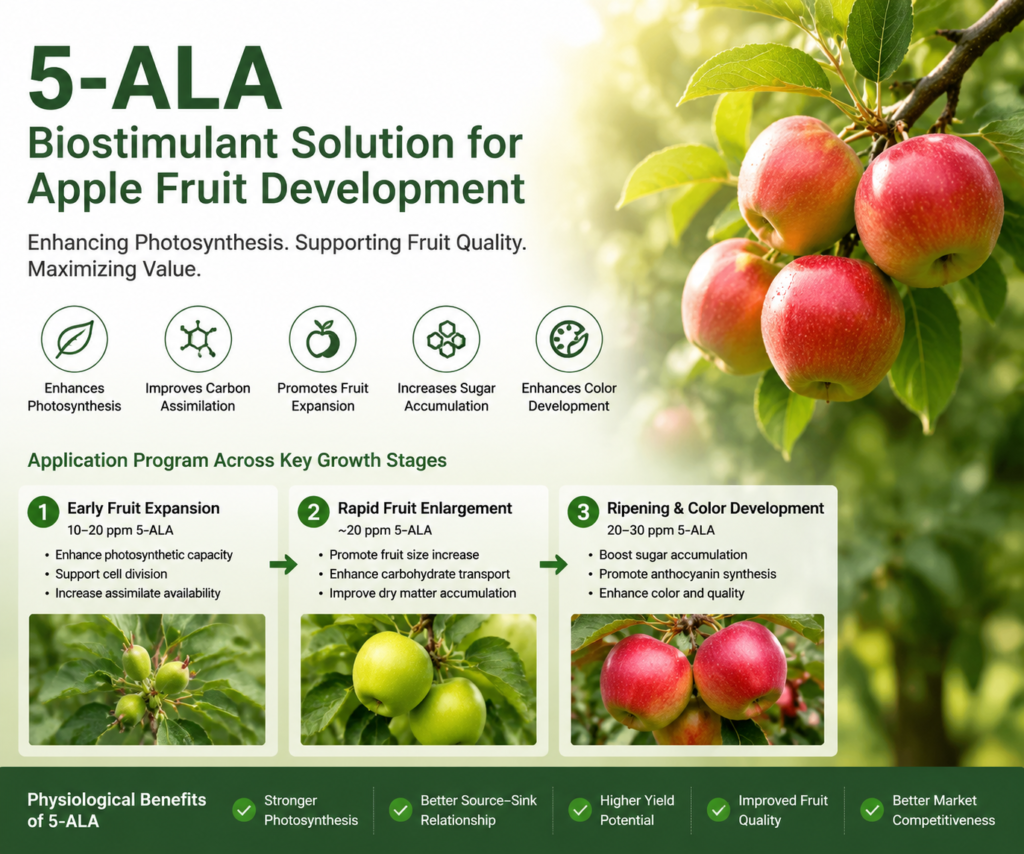
5-Aminolevulinic Acid – A Biostimulant Strategy for Fruit Expansion, Sugar Accumulation and Color Development
1. Introduction: Physiological Challenges in Apple Fruit Development
In temperate apple production systems, the period from late fruit set to ripening is characterized by intense competition for assimilates between vegetative growth and fruit development.
During this stage, growers typically face three key physiological constraints:
- Limited photosynthetic efficiency under high crop load conditions
- Insufficient carbohydrate allocation to developing fruits
- Suboptimal sugar accumulation and color development at ripening stage
These limitations directly affect fruit size, marketable yield, and quality consistency.
In this context, 5-aminolevulinic acid has gained increasing attention as a functional plant biostimulant regulating photosynthetic metabolism and carbon partitioning.
2. Mode of Action of 5-Aminolevulinic Acid (5-ALA) in Apple Physiology
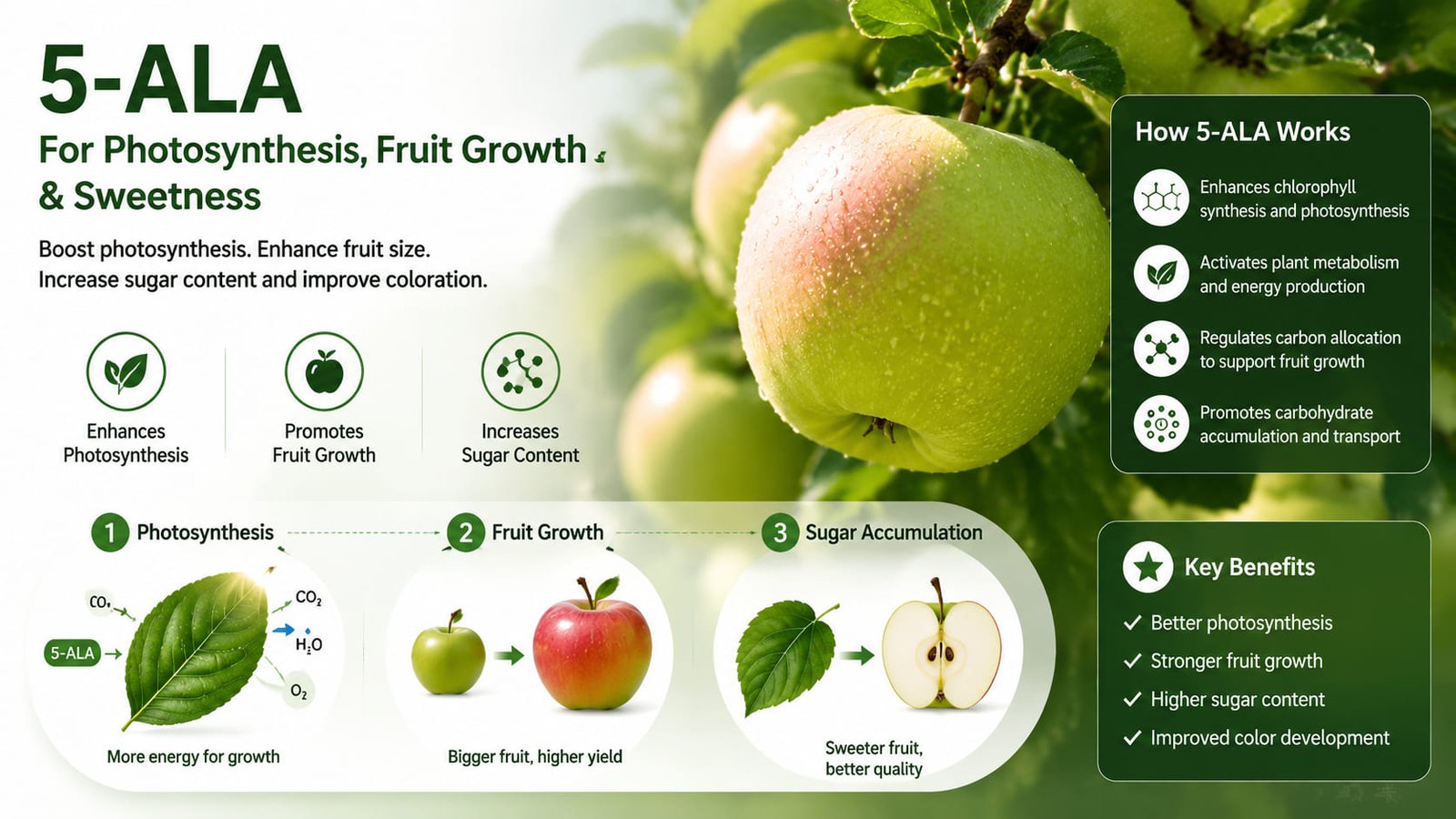
5-ALA is a key precursor in the chlorophyll biosynthetic pathway and plays a regulatory role in plant energy metabolism.
Its physiological functions in apple trees include:
- Enhancement of chlorophyll biosynthesis and leaf greenness stability
- Improvement of photosynthetic electron transport efficiency
- Increase in net carbon assimilation under fruiting stress conditions
- Optimization of assimilate partitioning toward sink organs (fruits)
- Promotion of sugar accumulation during fruit maturation
- Stimulation of anthocyanin biosynthesis contributing to fruit coloration
From a functional perspective, 5-ALA acts as a photosynthesis enhancer and carbon allocation regulator, particularly effective during high sink demand stages.
3. Application Strategy Across Fruit Development Stages
3.1 Early Fruit Expansion Stage
Objective: Enhance photosynthetic capacity and initiate fruit cell expansion
At early fruit development, maintaining strong canopy photosynthesis is critical to support rapid cell division and enlargement.
Recommended strategy:
- Balanced fertigation with reduced nitrogen input
- Increased potassium availability to support carbohydrate synthesis
- Humic substances to improve nutrient use efficiency
Foliar program:
- 5-ALA: 10–20 ppm
- monopotassium phosphate (MKP)
- calcium-based formulations
Expected outcomes:
- Improved leaf photosynthetic efficiency
- Enhanced early fruit cell expansion
- Increased assimilate availability for developing fruits
3.2 Rapid Fruit Enlargement Stage
Objective: Promote fruit size increase and dry matter accumulation
During this stage, fruits act as dominant sink organs requiring continuous carbohydrate supply.
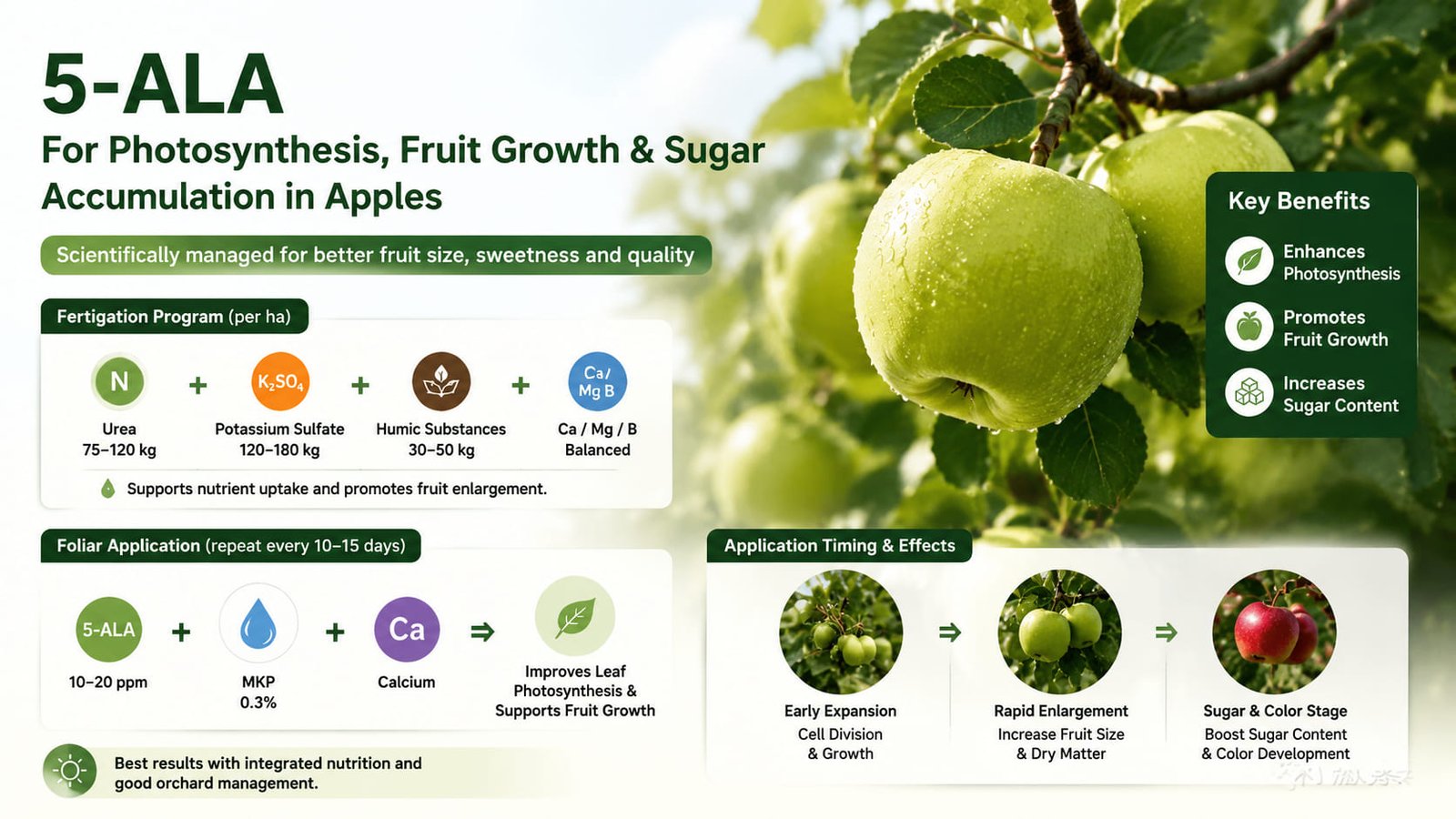
Recommended strategy:
- Potassium-dominant fertigation program
- Controlled nitrogen reduction
- Supportive amino acid nutrition to maintain metabolic activity
Foliar program:
- 5-ALA: ~20 ppm
- MKP 0-52-34
- Amino acid biostimulants
Expected outcomes:
- Increased fruit weight and size uniformity
- Enhanced carbohydrate translocation efficiency
- Improved dry matter accumulation
3.3 Ripening and Color Development Stage
Objective: Enhance sugar accumulation and improve coloration quality
At the final stage of fruit development, metabolic shifts favor sugar accumulation and secondary metabolite synthesis.
Recommended strategy:
- Minimized nitrogen application
- Potassium supplementation to support sugar transport
- Balanced calcium, magnesium, and boron supply
Foliar program:
- 5-ALA: 20–30 ppm
- MKP (0.5% solution equivalent)
- Calcium-based foliar nutrition
Expected outcomes:
- Increased soluble solids content (Brix)
- Enhanced anthocyanin synthesis
- Improved uniform fruit coloration
- Better firmness and postharvest quality
4. Integrated Biostimulant Concept
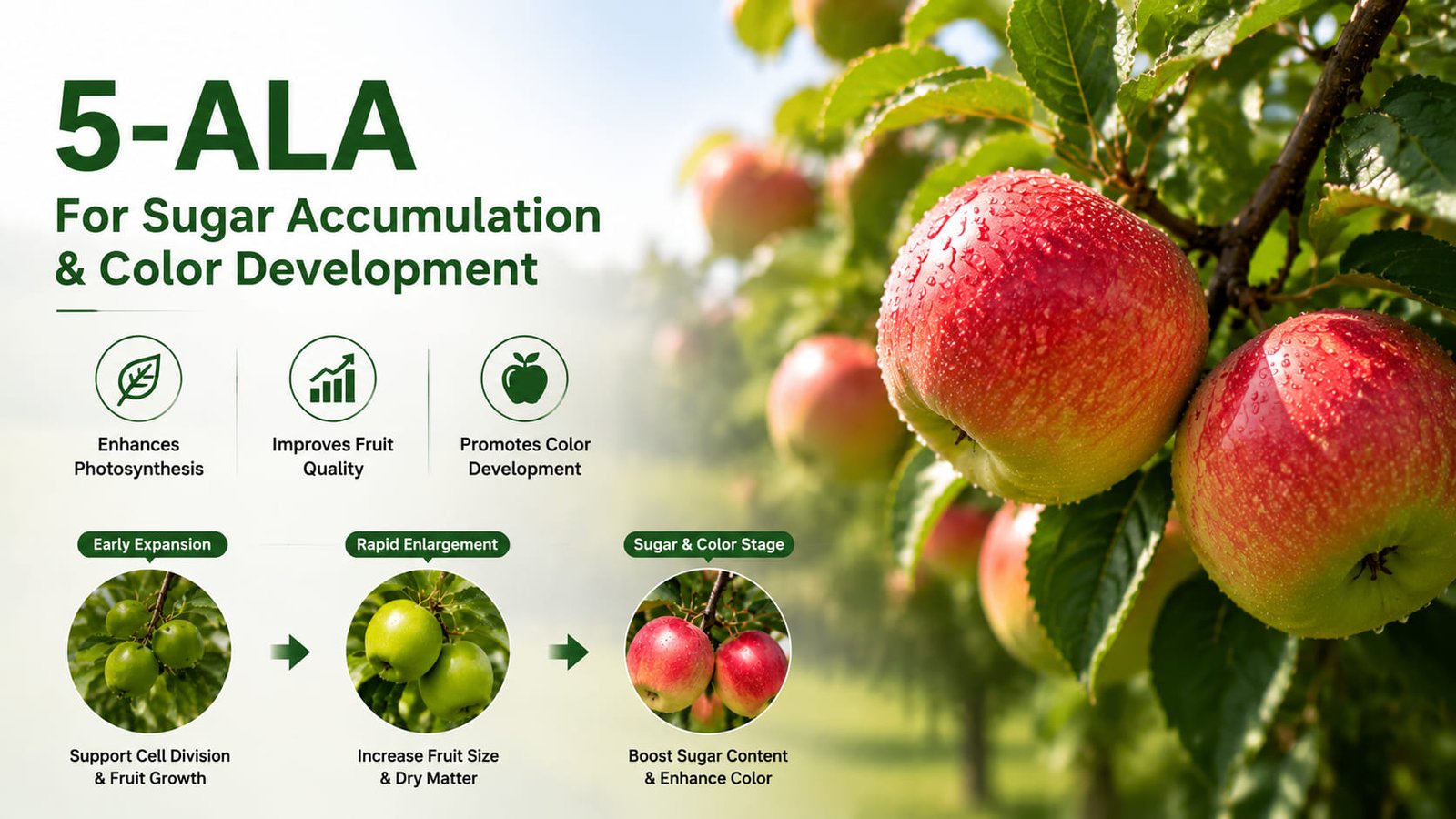
The use of 5-ALA in apple production should be understood as part of an integrated physiological management system:
- Stage 1: Enhance photosynthetic capacity
- Stage 2: Improve carbon allocation to fruits
- Stage 3: Optimize sugar accumulation and coloration
When combined with potassium-centered nutrition management, 5-ALA supports the synchronization of source–sink relationships, improving both yield and quality parameters.
5-Aminolevulinic acid represents a functional biostimulant capable of improving key physiological processes in apple trees during critical reproductive stages.
Its application contributes to:
- Higher photosynthetic efficiency
- Improved carbohydrate distribution
- Enhanced fruit enlargement
- Better sugar accumulation
- Superior coloration quality
This makes 5-ALA a promising tool in modern sustainable fruit production systems focused on quality-oriented yield optimization.