
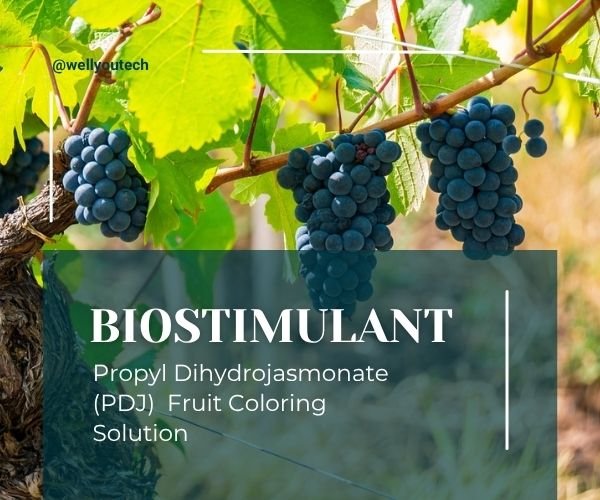
1. About Fruit Coloring
1.1 Importance of Fruit Coloring
Fruit needs to fully exhibit proper color to attract buyers’ purchasing desire, achieve a competitive price in the market, and finally help farmers obtain better economic benefits.
The color of the fruit is an important index to evaluate the appearance quality of the fruit, and it is also one of the most valued sensory indicators for consumers.
1.2 Factors Affecting Fruit Coloring
Inner Factor – Anthocyanins
The formation of fruit color is mainly determined by the content of chlorophyll, carotenoids, and anthocyanins.
- Chlorophyll: mainly green pigment
- Carotenoids: yellow to red pigment
- Anthocyanins: key pigment responsible for multiple colors
Among these, anthocyanins play a crucial role in fruit coloring such as grapes and cherries.
👉 Improving anthocyanin content is the key to improving fruit coloration.
Outer Factors
Temperature
Appropriate low temperature can accelerate the decomposition of chlorophyll and increase the synthesis of anthocyanins and carotenoids. Night-time low temperature reduces respiration intensity, increases sugar accumulation, weakens protein synthesis, and promotes pigment formation.
Light
Light promotes photosynthesis, allowing more sugar to flow into the fruit, and also directly induces pigment formation.
Water and Fertilizer
Excessive watering or excessive nitrogen fertilizer can cause delayed fruit maturity and poor coloring.
- Too much nitrogen reduces red color and sugar accumulation
- Potassium promotes sugar accumulation and coloring
- Phosphorus promotes fruit ripening and hormone balance
Fruit Tree Condition
Tree vigor, fruit load, and canopy permeability all affect coloring. Poor ventilation and light penetration will negatively affect fruit coloring.
Pests and Diseases
Damage to leaves reduces photosynthesis efficiency, slows sugar accumulation, and makes coloring more difficult.
1.3 Methods to Improve Fruit Coloring
- Improve light conditions
- Optimize water and fertilizer management
- Adjust fruit load reasonably
- Apply physical techniques (girdling, fruit turning, reflective film)
- Use chemical agents (ethephon, ABA)
1.4 Limitations of Traditional Coloring Agents
Abscisic Acid (ABA)
- Promotes coloring but not ripening
- May cause uneven coloring
Ethephon
- May cause leaf aging
- Risk of fruit drop at high concentration
- Requires precise dosage control
2. New Coloring Agent – Propyl Dihydrojasmonate (PDJ)
2.1 Introduction
Propyl dihydrojasmonate (PDJ) is a synthetic plant growth regulator similar in structure to jasmonic acid, a natural plant hormone commonly found in vascular plants.
It has similar physiological functions and action patterns and is environmentally friendly.
Suitable for crops such as jujube, citrus, grape, strawberry, apple, and others.
2.2 Mode of Action
PDJ promotes the orderly synthesis of ethylene and the early expression of ABA and ethylene in plants, guiding the synthesis and accumulation of anthocyanins and promoting uniform fruit coloring.
Ethylene acts as an essential endogenous hormone in the coloring process, while soluble sugar accumulation is a key nutritional factor. These two factors work together to improve fruit color naturally, enhance quality, and increase sugar-acid ratio.
2.3 Functions
- Promotes anthocyanin synthesis and uniform coloring
- Enhances root vitality and nitrate reductase activity
- Increases chlorophyll content and promotes photosynthesis
- Improves nitrogen and phosphorus absorption
- Promotes sugar transport and accumulation
- Enhances resistance to diseases, cold, and drought
2.4 Product Information
- Name: Propyl Dihydrojasmonate
- CAS No.: 158474-72-7
- Molecular Formula: C15H26O3
- Molecular Weight: 240.33856
Physical Properties:
Colorless viscous transparent liquid with aromatic smell; soluble in methanol, ethanol, and acetone; insoluble in water; stable under acidic, neutral, and alkaline conditions.
Formulations:
98% TC, 5% / 10% / 20% SL
3. Application of Propyl Dihydrojasmonate (PDJ)
3.1 Usage Method
- Dilution: 750–1500 times
- Example: 20 ml mixed with 15–30 L water
- Application: Spray the whole plant
3.2 Application Timing
- First application when fruit coloring reaches 10%–15%
- Second application after 7–14 days
- Optional application 15–20 days before harvest for long coloring crops
3.3 Effects on Crops
Grapes
Increases berry size, weight, and soluble solids, and promotes fruit coloring
Apples
Promotes healthy ripening, improves coloring, and enhances fruit quality
Field Crops (Wheat, Maize, Rice)
Improves resistance to cold, drought, and viral stress
4. Advantages of PDJ
- Wide application period and simple usage
- Whole plant spraying saves labor and time
- Promotes natural and uniform coloring
- Improves sugar-acid ratio and fruit quality
- No fruit drop, no softening, no cracking
- Enhances storage performance
- Provides disease resistance
5. Comparison with Other Coloring Agents
| Item | S-ABA | Ethephon | PDJ |
|---|---|---|---|
| Coloring | Yes | Fast | Fast & uniform |
| Ripening | No | Limited | Yes |
| Risk | Fruit drop | Leaf aging | Low risk |
| Application | Fruit only | Whole plant | Whole plant |
6. Field Performance
Field tests show that PDJ can promote fruit coloring effectively, improve fruit quality, and avoid the side effects such as leaf aging and fruit drop caused by traditional coloring agents.
7. Support for Customers
- Free samples
- Technical guidance
- Customized packaging and labeling
- Formula support for mixing with fertilizers or PGRs
- After-sales service