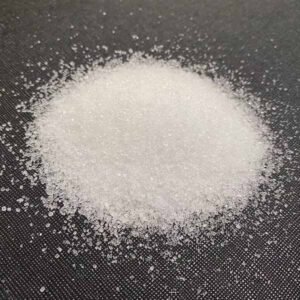
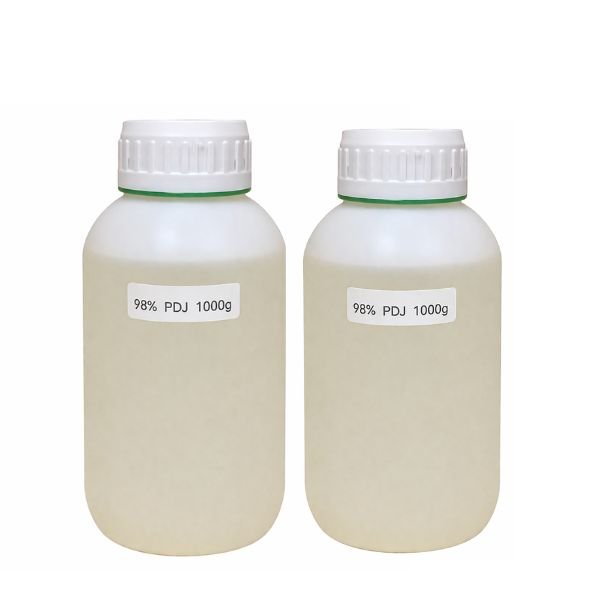
Propyl Dihydrojasmonate (PDJ)
Advanced Solution for Fruit Coloring and Quality Improvement
Product Overview
Propyl dihydrojasmonate (PDJ) is a synthetic plant growth regulator structurally similar to jasmonic acid, a natural hormone widely present in plants.
It is designed to regulate physiological processes related to fruit coloring and ripening by promoting anthocyanin accumulation and coordinating endogenous hormone activity.
PDJ is suitable for a wide range of crops including grapes, apples, citrus, jujube, strawberries, tomatoes, and peppers.
How Propyl Dihydrojasmonate Improves Fruit Coloring
Fruit coloration is primarily influenced by pigment composition, especially anthocyanins, as well as environmental and cultivation factors such as temperature, light, water, and nutrient management.
PDJ works by promoting the synthesis of ethylene and enhancing the expression of ABA-related pathways, which together regulate anthocyanin accumulation and sugar metabolism.
Through this mechanism, PDJ helps achieve more uniform, natural, and stable fruit coloring.
Key Benefits of Propyl Dihydrojasmonate
Enhances Fruit Coloring
Promotes rapid and uniform accumulation of anthocyanins, resulting in improved fruit surface coloration without uneven coloring issues.
Improves Fruit Quality
Increases sugar accumulation and improves sugar-acid ratio, contributing to better taste, appearance, and market value.
Promotes Ripening
Unlike some traditional agents, PDJ supports both coloring and ripening processes simultaneously.
Enhances Plant Growth
Improves chlorophyll content, photosynthetic efficiency, and nutrient absorption, supporting overall plant health.
Strengthens Stress Resistance
Enhances crop resistance to cold, drought, and diseases during the fruit development and ripening stages.
Advantages Over Traditional Coloring Agents
Compared with commonly used fruit coloring regulators such as abscisic acid (ABA) and ethephon:
- PDJ promotes both coloring and ripening, while ABA mainly affects coloring only
- PDJ does not cause leaf aging or fruit drop risks commonly associated with ethephon
- PDJ provides more uniform coloring across the whole plant
- PDJ improves sugar accumulation and fruit quality
Technical Specifications of Propyl Dihydrojasmonate
| Item | Details |
|---|---|
| Product Name | Propyl Dihydrojasmonate |
| CAS No. | 158474-72-7 |
| Molecular Formula | C15H26O3 |
| Molecular Weight | 240.34 |
| Appearance | Colorless viscous transparent liquid |
| Solubility | Soluble in methanol, ethanol, acetone; insoluble in water |
| Stability | Stable under acidic, neutral and alkaline conditions |
Application Instructions
Dosage and Dilution
- Dilution ratio: 750–1500 times
- Example: 20 ml mixed with 15–30 L water
Application Method
Spray evenly on the whole plant.
Application Timing
- First application: when fruit coloring reaches 10%–15%
- Second application: 7–14 days later
- Optional: additional application 15–20 days before harvest for long coloring crops
Crop Applications
PDJ is suitable for:
- Grapes
- Apples
- Citrus
- Jujube
- Strawberries
- Tomatoes
- Peppers
Effects:
- Improves fruit size and weight
- Enhances soluble solids content
- Promotes uniform coloring
- Improves overall fruit quality
Compatibility
PDJ can be used in combination with:
- Potassium fertilizers
- Micronutrient fertilizers
- Other plant growth regulators (under guidance)
Packaging Options
- 200L Drum
- 1000L IBC
- Customized packaging available
Storage and Handling
Store in a cool, dry, and well-ventilated place, away from direct sunlight. Keep container tightly closed when not in use.
Technical Support
Wellyou Tech provides:
- Product selection guidance
- Application recommendations
- Formula support for combined use
- Customized labeling and packaging
- After-sales technical support