
1. Product Overview
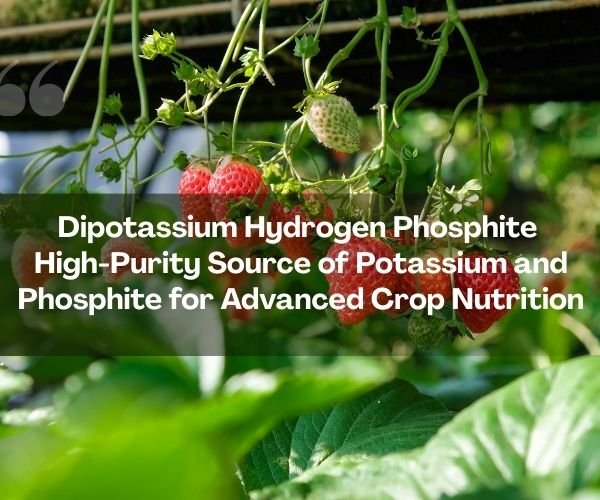
Dipotassium Hydrogen Phosphite (K₂HPO₃, liquid) is a high-purity, fully water-soluble phosphite–potassium fertilizer widely adopted in intensive and precision agriculture.
Unlike traditional phosphate fertilizers, phosphite (HPO₃²⁻) exists in a lower oxidation state, giving it unique mobility, bioavailability, and plant defense activation capabilities.
The product is formulated as a clear, stable liquid with high active content, making it suitable for:
- foliar fertilization
- fertigation and drip irrigation
- greenhouse production
- high-concentration liquid fertilizer formulations
2. Technical Specifications
| Parameter | Specification |
|---|---|
| Appearance | Colorless, transparent liquid |
| Active Content | ≥ 50% ± 0.5 |
| Phosphorus Content (as P₂O₃) | ≥ 17% |
| Converted P₂O₅ | ≥ 22% |
| P₂O₅ Concentration | ≥ 350 g/L |
| Potassium Content (as K₂O) | ≥ 29% |
| K₂O Concentration | ≥ 450 g/L |
| Density | 1.5 ± 0.2 g/mL |
| pH Value | 7–9 |
| Chloride (Cl⁻) | ≤ 0.1% |
| Water Insoluble Matter | ≤ 0.1% |
| Heavy Metals (Pb, total) | ≤ 0.001% |
| Iron (Fe) | ≤ 50 mg/kg |
The product is manufactured under controlled conditions to ensure stability, low impurity content, and consistent nutrient availability.
3. Chemical Properties and Functional Mechanisms
3.1 Molecular Characteristics
- Formula: K₂HPO₃
- Valence State of P: +3 (phosphite), more reactive than phosphate (+5)
- Mobility:
Phosphite displays excellent xylem and phloem mobility, allowing systemic movement throughout the plant.
3.2 Nutritional Function
- Provides highly available potassium (K) for osmotic regulation, stomatal activity, carbohydrate translocation, and fruit quality improvement.
- Supplies phosphorus in phosphite form, which can be partially oxidized by soil microorganisms to phosphate.
3.3 Plant Defense Activation Mechanism (Induced Resistance)
Dipotassium Hydrogen Phosphite is recognized not only as a nutrient source but also as a plant defense activator through the following mechanisms:
(1) Induced Systemic Resistance (ISR)
Phosphite triggers:
- phenylpropanoid pathway
- production of phytoalexins
- lignification of cell walls
- elevated antioxidant enzyme activity
This enhances the plant’s intrinsic ability to resist biotic stress.
(2) Direct Action Against Oomycetes
Phosphite inhibits:
- mycelial growth of Phytophthora, Pythium, Peronospora
- sporangia germination and zoospore release
This offers preventive and suppressive effects against:
- downy mildew
- root rot
- late blight
- damping-off diseases
(3) Synergistic Response with Potassium Nutrition
Potassium strengthens:
- cell wall integrity
- enzyme activation
- stress resilience
This synergy enhances disease suppression and improves crop physiological performance.
4. Application Fields
4.1 Liquid Fertilizer Manufacturing
Dipotassium Hydrogen Phosphite is widely used in:
- high-concentration NPK liquid fertilizers
- phosphorus–potassium specialty formulations
- biostimulant blends
Advantages:
- excellent solubility
- stable pH
- minimal precipitation
- high clarity
4.2 Foliar Application
Benefits:
- rapid absorption
- strong systemic movement
- quick improvement of plant immunity
Suitable crops:
- fruit trees (citrus, apple, mango)
- grapes
- vegetables (tomato, cucumber, pepper)
- field crops (potato, soybean, corn)
4.3 Fertigation / Drip Irrigation
Perfect for:
- greenhouse and hydroponic systems
- precision agriculture
- sandy soils with high leaching potential
Ensures uniform nutrient delivery and excellent plant uptake efficiency.
4.4 Integration with Biological Products
Can be combined with:
- Bacillus-based biocontrol agents
- humic acids and fulvic acids
- amino acid liquids
- seaweed extracts
This creates next-generation biostimulant–nutrient synergy fertilizers.
5. Recommended Usage
Foliar Spray
Perform preliminary trials; adjust concentration based on crop stage and climatic conditions.
Fertigation
Apply during:
- flowering
- fruit expansion
- high disease pressure periods
Compatibility
Compatible with most fertilizers and agrochemicals.
Avoid mixing with strong oxidizers or highly alkaline materials.
6. Key Advantages
High Active Content
≥ 50% ensures strong nutrient density and cost efficiency.
Systemic Action
Phosphite moves through both xylem and phloem for full-plant protection.
Dual Function
Provides nutrition + disease resistance enhancement, rarely found in traditional fertilizers.
High Purity
Low impurities reduce risks of phytotoxicity and equipment clogging.
Strong Market Demand
Suitable for:
- large plantations
- greenhouse crops
- fertigation-based agriculture
- liquid fertilizer blending factories
Dipotassium Hydrogen Phosphite (liquid) is a high-performance phosphorus–potassium product designed for advanced agricultural systems.
Through its unique phosphite chemistry, it provides essential macronutrients and significantly enhances plant defense against pathogens—especially oomycetes.
With excellent purity, systemic action, and multifunctional benefits, it is one of the most valuable technologies for modern growers, fertilizer producers, and distributors seeking higher crop yield, improved quality, and sustainable farming solutions.