
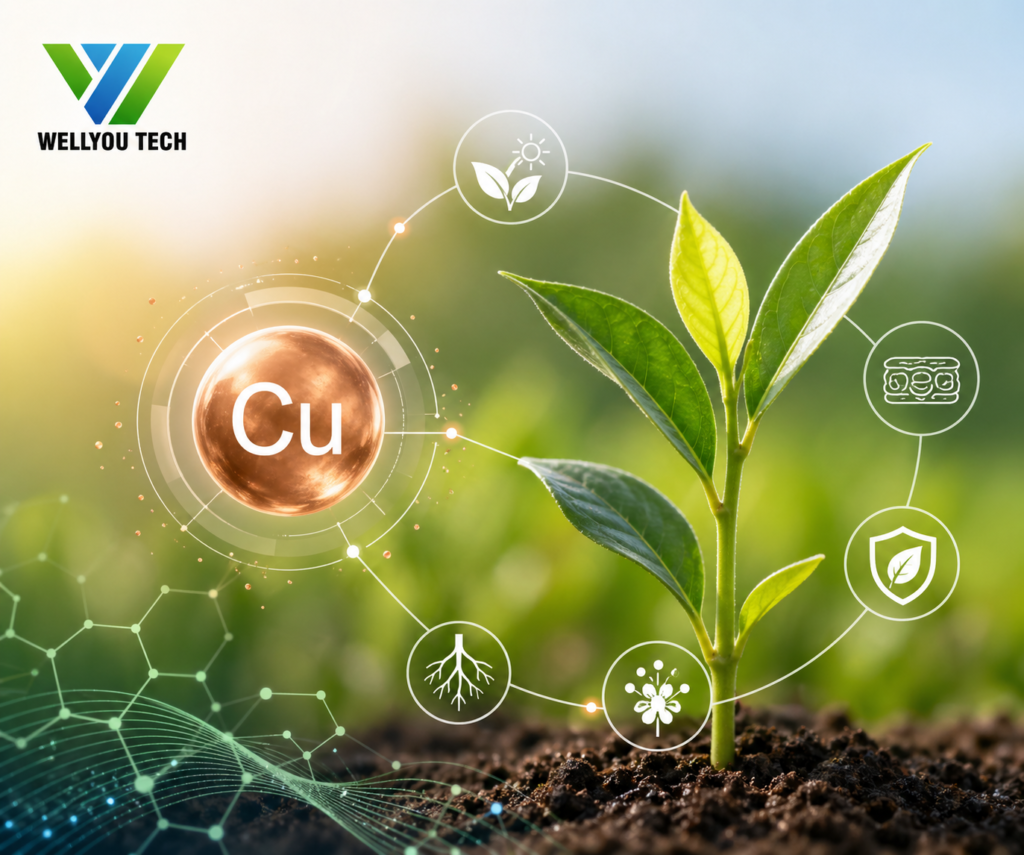
Copper (Cu) is an essential micronutrient in plant nutrition, required in small amounts but critical for plant growth, yield, and crop quality.
In modern agriculture, copper management is not only about supplying the element itself, but ensuring it remains available for plant uptake under diverse soil conditions.
This is why chelated copper fertilizers such as EDTA-Cu are increasingly used in advanced fertilization programs.
1. Role of Copper in Plant Growth
1.1 Copper in Photosynthesis and Respiration
Copper plays a key role in plant energy metabolism.
It is involved in:
- Photosynthesis, as part of electron transport proteins
- Respiration, through enzymes like cytochrome c oxidase
These processes directly influence plant vigor and biomass accumulation.
1.2 Copper in Plant Structure and Strength
Copper-dependent enzymes contribute to lignin synthesis, which:
- Strengthens plant cell walls
- Improves stem rigidity
- Reduces lodging risk
This is particularly important for cereal crops and high-yield systems.
1.3 Copper in Plant Defense and Stress Resistance
Copper is a component of antioxidant enzymes such as SOD (superoxide dismutase), helping plants:
- Reduce oxidative stress
- Improve tolerance to environmental stress
- Enhance disease resistance
1.4 Copper in Flowering and Yield Formation
Copper is essential for:
- Pollen development
- Fertilization
- Fruit and seed formation
Deficiency often leads to poor flowering and reduced yield.
2. Copper Deficiency in Plants
Copper deficiency is common, especially in:
- Alkaline soils
- Sandy soils
- High organic matter soils
Typical symptoms include:
- Chlorosis in young leaves
- Leaf deformation and curling
- Weak stems and lodging
- Poor flowering and low fruit set
Even when copper is present in soil, plants may not absorb it efficiently.
3. Why Copper Availability Is a Challenge
One of the biggest issues in micronutrient management is low availability.
In conventional forms (such as copper sulfate):
- Copper can be easily fixed in soil
- Availability decreases at high pH
- Uptake efficiency is limited
This results in “hidden deficiency” in many crops.
4. EDTA-Cu: A More Efficient Copper Fertilizer
To overcome these limitations, chelated copper fertilizers (EDTA-Cu) are widely used.
Key advantages of EDTA-Cu:
- High solubility in water
- Stable across a wide pH range
- Improved nutrient availability
- Efficient uptake through roots and leaves
Compared with traditional copper sources, EDTA-Cu helps ensure that copper remains in a plant-available form throughout the application process.
5. Application of EDTA-Cu in Agriculture
EDTA-Cu is suitable for:
- Foliar spray
- Fertigation systems
- Water-soluble fertilizer formulations
Typical formulations (Cu 10–15%) are designed to provide efficient correction of copper deficiency while maintaining crop safety.
When used as part of a balanced micronutrient program, EDTA-Cu supports both plant nutrition and overall crop health.
6. Best Practices for Copper Management
To achieve optimal results:
- Conduct soil and tissue analysis
- Apply copper at recommended rates
- Avoid excessive application
- Choose high-quality chelated micronutrients
Balanced copper management helps prevent both deficiency and toxicity.
Copper is a vital micronutrient that influences plant metabolism, structure, and productivity.
However, its effectiveness depends largely on how it is delivered.
Modern agriculture increasingly relies on chelated copper fertilizers such as EDTA-Cu to improve nutrient efficiency, enhance crop resilience, and support sustainable production systems.