
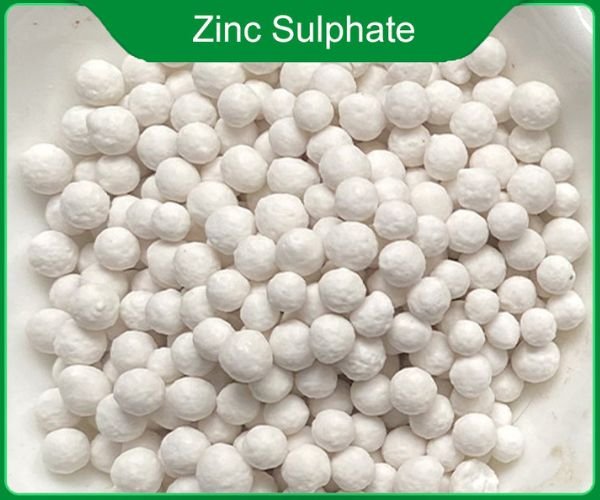
Zinc sulphate is one of the most important zinc sources in modern agriculture. Such as compound fertilizers, water-soluble fertilizers, foliar nutrition programs, and functional fertilizer formulations.
Unlike general industrial ZnSO₄, agricultural-grade zinc sulphate places far higher requirements on purity, heavy metal control, solubility, and long-term crop safety. These quality differences are not accidental — they are the direct result of manufacturing process design and control.
This article introduces the complete manufacturing process of agricultural-grade zinc sulphate, highlighting the key technical steps that determine product safety, consistency, and field performance.
1. Raw Material Selection and Pretreatment (Quality Foundation)
1.1 Key Raw Materials
The main raw materials used in zinc sulphate production include:
- Zinc oxide (ZnO) or secondary zinc oxide
- Sulphuric acid (H₂SO₄)
For agricultural-grade ZnSO₄, zinc oxide quality is critical. Its purity directly affects:
- Heavy metal content (Cd, Pb, Cu, Ni)
- Water-insoluble matter
- Crop safety under repeated application
1.2 Washing and Impurity Removal
Secondary zinc oxide is pre-washed before reaction to remove soluble impurities such as:
- Sodium (Na⁺)
- Potassium (K⁺)
- Chloride (Cl⁻)
This pretreatment step significantly improves:
- Final product appearance
- Solubility and dissolution speed
- Stability in fertilizer formulations
Wash water and residues can be recycled or recovered to improve overall resource efficiency.
2. Acid Dissolution Reaction (Sulphation)
2.1 Reaction Principle
In a controlled reactor, zinc oxide reacts with sulphuric acid according to the following equation:
ZnO + H₂SO₄ → ZnSO₄ + H₂O
2.2 Process Control Points
Key operating parameters include:
- Controlled heating to ensure complete reaction
- Continuous mixing to maintain solution uniformity
- Precise acid-to-zinc ratio to avoid free acid or unreacted solids
After reaction, a crude zinc sulphate solution containing insoluble matter and trace impurities is obtained.
3. Solid–Liquid Separation and Primary Filtration
The reaction slurry is subjected to pressure filtration to remove insoluble residues.
Outputs include:
- Filtered zinc sulphate solution
- Filter cake (slag 1), which can be recycled or externally treated
This step is essential for controlling water-insoluble content, a key indicator for agricultural-grade products.
4. Purification and Impurity Control (Core Agricultural-Grade Process)
To meet agricultural-grade standards, multi-step purification is required, which represents the main difference from ordinary industrial ZnSO4.
4.1 Zinc Powder Cementation
Zinc powder add to the purification tank to remove heavy metals through displacement reactions, effectively reducing:
- Copper (Cu)
- Cadmium (Cd)
- Nickel (Ni)
4.2 Oxidation Treatment
Hydrogen peroxide (H₂O₂) is introduced in oxidation barrels to:
- Convert low-valence impurities
- Promote precipitation of trace contaminants
Subsequent pressure filtration removes purification residues (slag 2 and slag 3), which are handled separately.
This stage ensures the zinc sulphate solution meets agricultural safety and regulatory requirements.
5. Evaporation, Concentration, and Crystallization
5.1 Multi-Effect Evaporation
Purified ZnSO4 solution enters a multi-effect evaporation system, which:
- Improves energy efficiency
- Precisely controls solution concentration
- Creates stable conditions for crystal growth
5.2 Controlled Crystallization
Under controlled temperature and concentration, zinc sulphate crystallizes into uniform crystals (monohydrate or heptahydrate), ensuring consistent physical properties.
6. Dewatering, Drying, and Packaging
6.1 Centrifugal Dewatering
Crystals are centrifuged to remove free surface moisture, reducing drying energy consumption.
6.2 Hot-Air Drying
Hot-air drying systems ensure target moisture levels, resulting in:
- Good flowability
- Storage stability
- Compatibility with fertilizer blending and water-soluble formulations
6.3 Packaging and Storage
Packed and stored under controlled conditions. Common packaging options include:
- 25 kg bags
- Big bags (FIBC)
7. Why the Manufacturing Process Matters for Agricultural Performance
Every production step directly affects the field performance of agricultural-grade zinc sulphate, including:
- Zinc availability to crops
- Solubility in irrigation and spraying systems
- Long-term soil and crop safety
- Consistency across fertilizer batches
A stable and well-controlled manufacturing process is the foundation of reliable fertilizer performance.
Conclusion: Agricultural-Grade Zinc Sulphate Is About Process, Not Just Zinc Content
Agricultural-grade zinc sulphate may appear to be a basic fertilizer raw material, but true quality differences lie in the manufacturing process.
From raw material pretreatment and purification to crystallization and drying, every technical detail contributes to product safety, consistency, and agronomic reliability.
This is the real value behind long-term, trustworthy agricultural zinc sulphate supply.
— Wellyou Tech Technical & Application Team