
1. Background
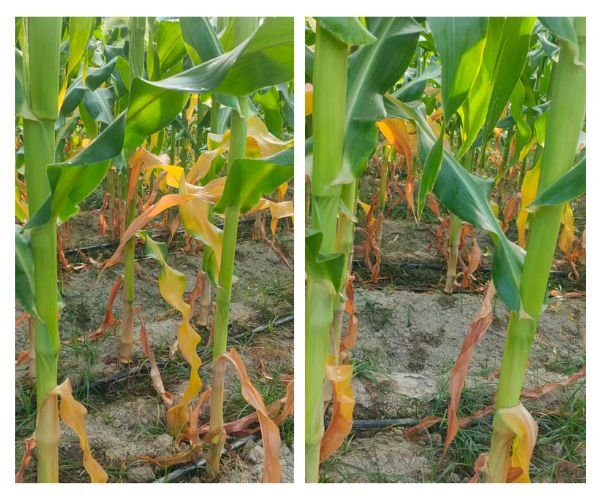
A maize grower in Hainan, China reported an unexpected phenomenon:
- During the early growth stage, maize treated with mineral-derived potassium fulvate showed vigorous growth and strong seedling establishment.
- However, at the mid-growth stage (pre-tasseling), plants began to show leaf yellowing symptoms.
- In contrast, control plots without fulvic acid application showed no yellowing, despite receiving the same urea fertilization.
This raised concerns about whether the use of potassium fulvate caused negative effects on crop performance.
2. Field Observations
- Input fertilizers:
- Potassium fulvate (early stage)
- Urea (throughout growth stages)
- Key observations:
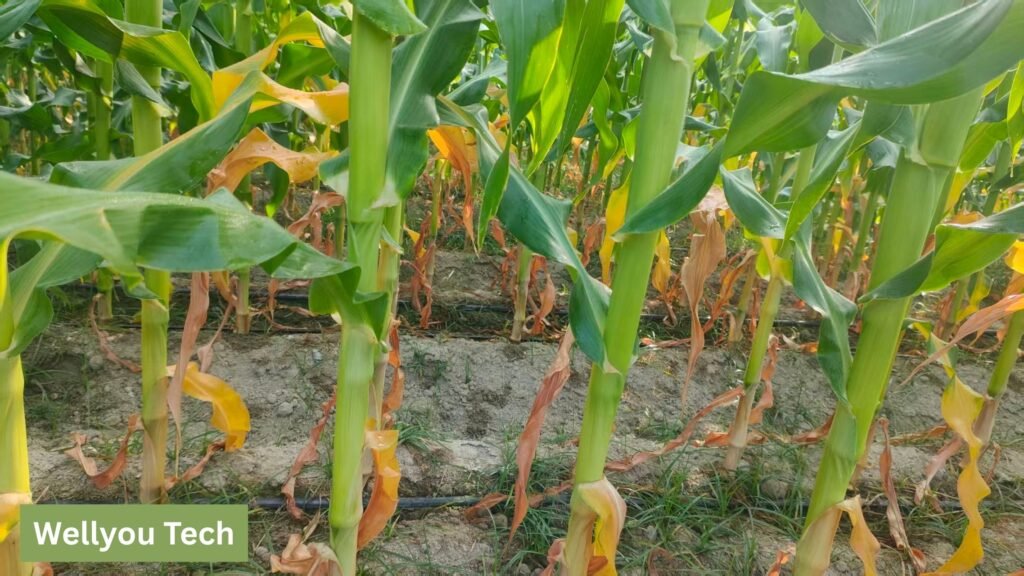
- Strong early vegetative growth in treated plots
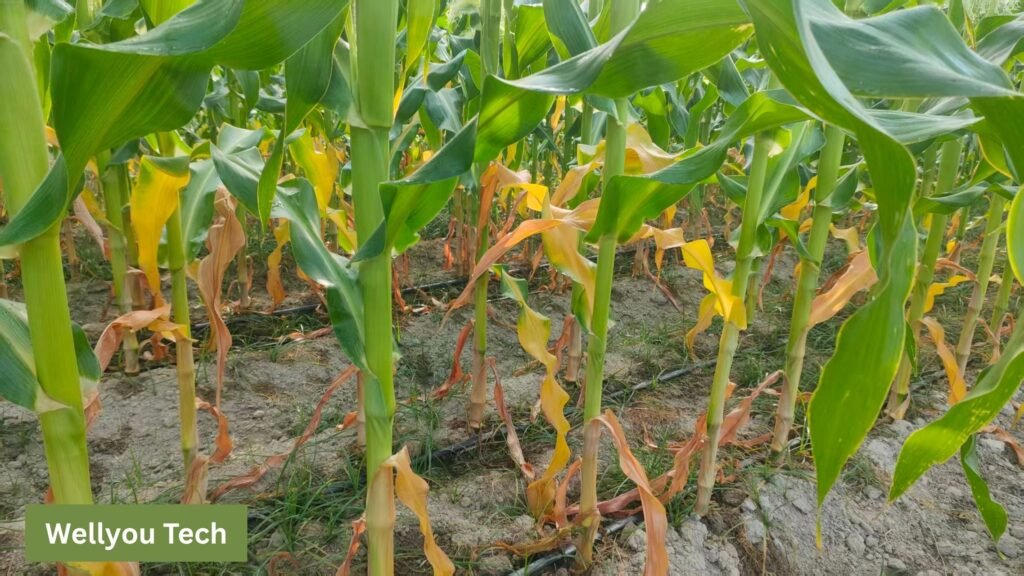
- Yellowing of older leaves at mid-stage
- No such symptoms in untreated (control) plots
3. Diagnosis: Core Mechanisms
After analysis, the issue was identified as temporary nitrogen deficiency, caused by the interaction between potassium fulvate and urea, rather than any toxicity.
3.1 Nitrogen Adsorption Effect
Mineral-derived potassium fulvate has a high adsorption capacity.
- It can temporarily bind urea-derived nitrogen, reducing its immediate availability.
- As a result:
- Control plots: Nitrogen is readily available → normal growth
- Treated plots: Nitrogen is partially immobilized → short-term deficiency → leaf yellowing
3.2 Accelerated Root Growth Increases Nitrogen Demand
Potassium fulvate significantly stimulates:
- Root proliferation
- Nutrient uptake capacity
This leads to a sharp increase in nitrogen demand.
- With the same urea application rate:
- Control plots: Supply meets demand
- Treated plots: Demand exceeds supply → deficiency symptoms appear
3.3 Increased Nitrogen Leaching
Fulvic acid improves soil structure and porosity, which is beneficial overall but may lead to:
- Faster movement of water through soil
- Increased leaching of urea nitrogen into deeper layers
If roots have not yet extended to these depths:
- Nitrogen becomes temporarily inaccessible
- Resulting in apparent deficiency despite fertilization
4. Key Insight
This issue is not caused by toxicity or phytotoxicity of potassium fulvate.
Instead, it is a nutrient dynamics imbalance:
Temporary nitrogen immobilization + Increased nitrogen demand + Enhanced leaching = Short-term nitrogen deficiency
5. Solution & Recommendations
Immediate Solution
- Apply an additional, moderate dose of urea to quickly correct nitrogen deficiency.
Optimized Fertilization Strategy
To avoid similar issues in future applications:
- Adjust Nitrogen Supply
- Increase nitrogen rate slightly when using fulvic acid products
- Or apply nitrogen in split applications
- Synchronize Nutrient Release
- Combine with quick-release nitrogen sources during rapid growth stages
- Improve Nitrogen Efficiency
- Consider stabilized nitrogen (e.g., inhibitors) if leaching is a concern
6. Conclusion
Potassium fulvate is a powerful biostimulant that:
- Enhances root growth
- Improves soil structure
- Increases nutrient uptake efficiency
However, its use can alter nitrogen dynamics, especially when combined with conventional fertilizers like urea.
Proper nutrient management—particularly adjusting nitrogen supply—is essential to fully realize its benefits without causing temporary deficiencies.